Modern agricultural machinery—tractors, combine harvesters, and farm implements—is enhancing Guyana’s farming productivity by reducing labour costs, accelerating planting and harvesting, and improving crop yields. Suppliers like Tractor Corner now make this equipment easier to access, helping farmers scale operations across rice, sugar, and cash-crop sectors.
Farming has always been the backbone of Guyana’s economy. From the rice paddies of the Essequibo to the sugar estates along the coast, agriculture feeds families and drives exports. Yet for decades, many farmers relied on manual labour and ageing equipment that slowed production and limited growth.
That picture is changing fast. Modern agricultural machinery in Guyana is reshaping how crops are planted, tended, and harvested. Tractors that once seemed out of reach are now widely available. Combine harvesters that took days to source can be bought locally. And a growing range of farm implements lets producers tackle everything from ploughing to spraying with far less effort.
This post explains how this shift is happening, what equipment is making the biggest difference, and where farmers can find reliable machinery for sale in Guyana.
Why is modern machinery so important for Guyanese farmers?
Guyana’s agricultural sector faces real pressures: rising demand, labour shortages, and the need to compete in regional markets. Manual methods simply can’t keep pace.
Machinery solves several problems at once. A single tractor can do the work of dozens of labourers in a fraction of the time. Mechanised harvesting reduces crop losses that happen when grain sits too long in the field. And precision implements help farmers use seed, water, and fertiliser more efficiently.
The result is higher output per acre, lower costs per tonne, and more consistent quality—all of which matter when selling to buyers at home and abroad.
What types of agricultural machinery are transforming farms in Guyana?
The biggest gains come from three categories of equipment: tractors, harvesters, and implements. Each plays a distinct role in the farming cycle.
How are tractors improving farming productivity?
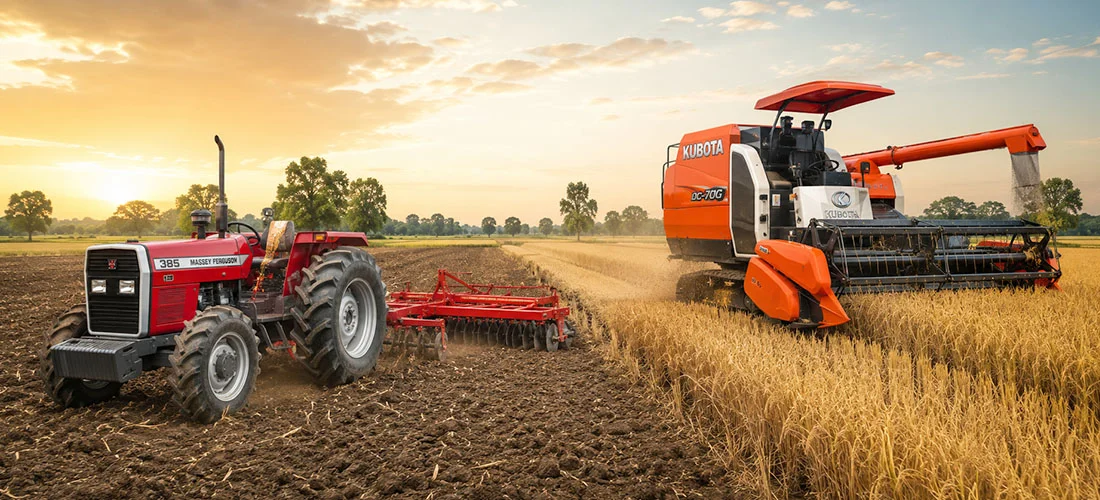
Tractors are the heart of any modern farm. They pull ploughs, power implements, transport produce, and handle dozens of jobs that once needed teams of workers.
For Guyanese farmers, the right tractor depends on the task. Smaller models suit market gardens and cash-crop plots, while higher-horsepower machines are built for large rice and sugar operations. With more tractors for sale in Guyana than ever before, farmers can match equipment to their land size and budget.
A reliable tractor also extends the working season. Fields that were too wet or too hard to work by hand become manageable, letting farmers plant earlier and harvest sooner.
What role do combine harvesters play?
Harvesting is where time matters most. Crops left standing too long lose quality and yield. Combine harvesters solve this by cutting, threshing, and cleaning grain in one continuous pass.
For rice—Guyana’s signature crop—this is a game-changer. A combine can harvest in hours what would take a crew several days. That speed reduces losses from weather and pests, and frees farmers to turn fields around faster for the next planting.
The growing availability of combine harvesters for sale in Guyana means even medium-sized producers can now access technology that was once limited to the largest estates.
Which farm implements make the biggest difference?
Implements are the attachments and tools that multiply what a tractor can do. The right set transforms a single machine into a complete farming system.
Common implementations driving productivity in Guyana include:
- Ploughs and harrows for preparing soil quickly and evenly
- Seeders and planters for accurate, efficient sowing
- Sprayers for targeted application of fertiliser and crop protection
- Trailers for moving produce and supplies around the farm
- Slashers and mowers for clearing land and managing pasture
With a wide choice of farm implements for sale in Guyana, producers can build a toolkit suited to their specific crops and conditions.
How does mechanisation affect costs and yields?
Buying machinery is an investment, but the returns add up quickly. Mechanised farms typically see lower labour costs, faster turnaround between crops, and reduced waste.
Consider rice production. Manual harvesting can leave a meaningful share of grain in the field, while a combine harvester captures far more of the crop. Over a single season, those savings can offset a large part of the equipment cost. Add in the ability to farm more land with the same workforce, and the case for mechanisation becomes clear.
There’s also a quality benefit. Machinery delivers more uniform results—straighter rows, even seeding, cleaner grain—which helps farmers meet the standards buyers expect.
Where can farmers buy agricultural machinery in Guyana?
Access has long been a barrier. Importing equipment directly can be costly and complicated, and finding spare parts or support afterwards is often harder still.
Local suppliers are closing that gap. Tractor Corner offers tractors, combine harvesters, and farm implements for sale in Guyana, giving farmers a single source for the equipment they need. Buying locally also makes servicing, advice, and parts more accessible—an important factor when machinery is central to your livelihood.
When choosing a supplier, look for one that offers a clear range of equipment, after-sales support, and guidance on matching machines to your farm. Choose a local dealer over a distant importer if reliable servicing and quick access to parts matter to your operation.
The road ahead for Guyanese agriculture
Mechanisation is no longer a luxury reserved for the biggest estates. As more agricultural machinery becomes available in Guyana, farmers of all sizes can increase productivity, reduce costs, and compete with confidence.
The next step is practical: assess your land, identify the tasks slowing you down, and explore the tractors, harvesters, and implements that fit your needs. Suppliers like Tractor Corner Guyana make it straightforward to find equipment built for Guyanese conditions—and to keep it running once it’s in the field.
Invest in the right machinery today, and you set your farm up for stronger harvests for years to come.
Frequently asked questions
What is the best tractor for small farms in Guyana?
Smaller, lower-horsepower tractors usually suit market gardens and cash-crop plots, offering enough power for ploughing and hauling without unnecessary cost. The best choice depends on your land size, soil type, and the implements you plan to use. A local supplier can help match a model to your needs.
How much does a combine harvester cost in Guyana?
Prices vary widely based on size, capacity, and whether the machine is new or used. Because a combine harvester captures more of the crop and cuts harvesting time dramatically, many rice farmers recover a significant part of the cost within a few seasons. Contact a local dealer like Tractor Corner Guyana for current pricing.
What farm implements should a new farmer buy first?
Most new farmers start with the basics: a plough or harrow for soil preparation, a seeder or planter for sowing, and a trailer for transport. A sprayer is a strong next purchase for managing fertiliser and crop protection. Build your toolkit around your main crop.
Is it better to buy machinery locally or import it?
Buying locally is usually the better choice if servicing, spare parts, and support matter to you. Imported machinery may seem cheaper upfront, but delays in repairs and parts can cost you during critical planting and harvest windows. Local suppliers like Tractor Corner Guyana offer easier access to after-sales help.
Why is agricultural machinery important for Guyana’s economy?
Agriculture is a major part of Guyana’s economy, and machinery raises productivity across rice, sugar, and cash crops. Higher yields, lower costs, and better quality help farmers compete in regional and export markets, strengthening the sector as a whole.
Related Posts