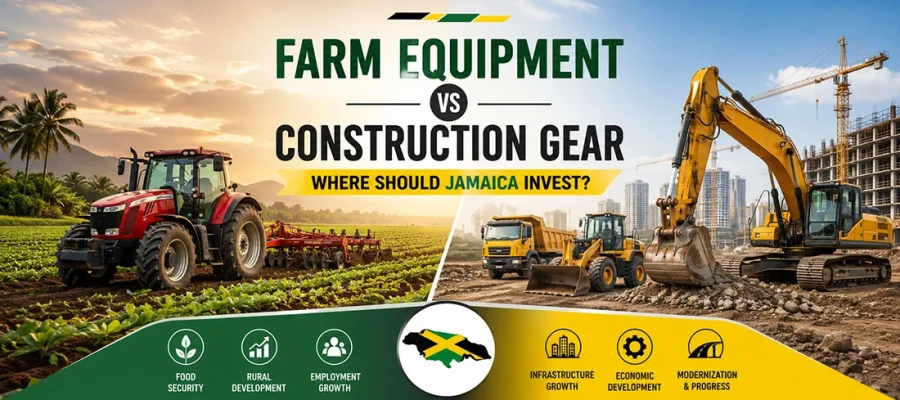
Agriculture has long been the backbone of Jamaica’s economy, deeply woven into the island’s culture and livelihood. From the rolling hills of St. Elizabeth to the fertile plains of Clarendon, farming is more than an occupation; it is a way of life. Yet, as the demands for food security and export markets grow, the methods of the past are no longer sufficient to meet the needs of the future. The days of relying solely on manual labour are fading, giving way to a new era of mechanisation.
At the heart of this transformation lies the tractor. Once a rare sight reserved for the largest estates, tractors are becoming essential tools for farmers of all scales across the island. The shift towards mechanisation is not just about speed; it is about precision, efficiency, and the ability to cultivate land that was previously difficult to manage. Whether preparing soil for planting yams or maintaining sprawling sugar cane fields, the right machinery makes all the difference.
For Jamaican farmers looking to scale their operations, finding reliable machinery is the first step towards modernisation. The availability of diverse equipment, from heavy-duty workhorses to versatile compact models, means there is a solution for every terrain and crop type. This evolution in farming technology is empowering local producers to increase yields, reduce physical strain, and compete more effectively in a global marketplace.
The Power of Massive Farm Tractors
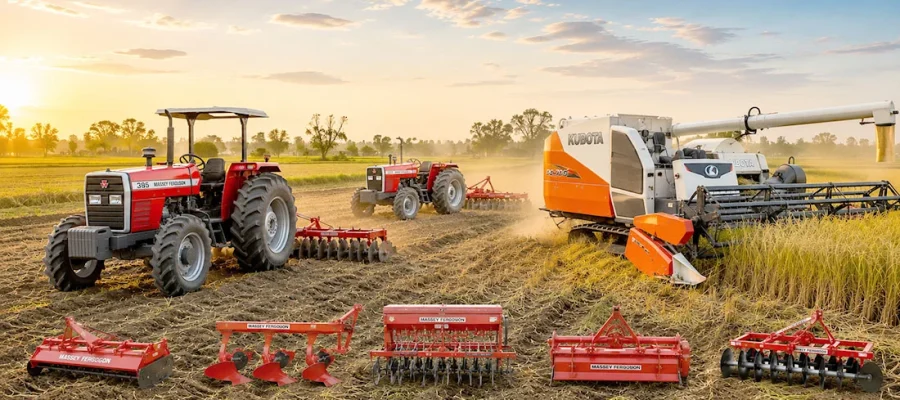
When we talk about large-scale agriculture, heavy-duty machinery is indispensable. Massive farm tractors are the giants of the field, designed to tackle the most demanding tasks with ease. These machines are engineered for durability and high performance, making them ideal for the challenging terrains often found in Jamaica’s rural interior.
enhancing productivity on large estates
For commercial farms producing crops like sugar cane, bananas, or citrus on a large scale, the sheer volume of work requires immense power. Massive tractors allow for deep ploughing, harrowing, and hauling heavy loads that would take weeks to complete manually. By mechanising these core tasks, farmers can significantly shorten their production cycles, allowing for multiple harvests in a single year.
The search for Massive Tractors for Sale in Jamaica has surged as more agricultural enterprises recognise the return on investment these machines offer. Tractor Corner has emerged as a key player in this space, providing robust models that can withstand the tropical climate and rugged soil conditions. These tractors are not just about raw power; they come equipped with modern hydraulics and power take-off (PTO) systems that allow for the attachment of various implements, from planters to sprayers.
tackling tough terrain
Jamaica’s topography is diverse, ranging from flat coastal lands to steep, rocky hillsides. Large tractors provide the traction and stability needed to navigate these environments safely. Their high ground clearance and powerful engines ensure they don’t get bogged down in muddy conditions during the rainy season, ensuring that farm operations can continue year-round.
The Versatility of Hand Tractors
Not every farm in Jamaica spans hundreds of acres. In fact, smallholder farmers contribute significantly to the nation’s domestic food supply. For these farmers, a full-sized tractor might be overkill—both in terms of cost and physical size. This is where the hand tractor, or walking tractor, shines.
a perfect fit for small plots
Walking Tractors in Jamaica are becoming increasingly popular among vegetable and root crop farmers. These two-wheeled machines are operated by a user walking behind them, making them incredibly manoeuvrable in tight spaces. They are perfect for terraced farms or smaller plots where turning a large vehicle would be impossible.
Despite their compact size, hand tractors are surprisingly powerful. They can be fitted with ploughs, rotavators, and even small trailers. For a farmer growing scotch bonnet peppers or scallions on a few acres, a walking tractor can reduce days of back-breaking hoeing into a few hours of work.
cost-effective mechanisation
One of the biggest barriers to mechanisation for small farmers is cost. Hand tractors offer an affordable entry point. They consume less fuel, require less maintenance, and are easier to transport than their four-wheeled counterparts. This accessibility allows small-scale farmers to professionalise their operations without the burden of heavy debt, fostering a more inclusive agricultural sector.
Small 4WD Tractors: The Middle Ground
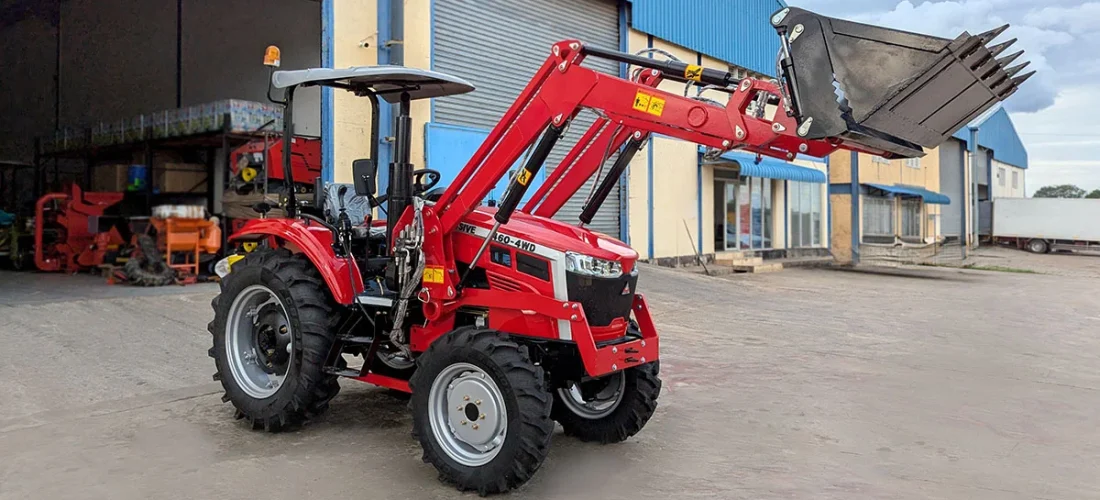
Bridging the gap between hand tractors and heavy-duty giants are the small 4WD tractors, often called mini tractors. These machines offer the comfort and capability of a ride-on tractor but in a compact frame that suits medium-sized farms.
navigating mixed farming systems
Many Jamaican farms are mixed enterprises, combining livestock with crop production. Mini Tractors in Jamaica are particularly well-suited for these environments. Their four-wheel-drive capability ensures they can handle slippery slopes and uneven pastures, while their smaller footprint causes less soil compaction compared to heavier models.
These tractors are versatile workhorses. They can mow grass between orchard rows, tow feed for livestock, and operate post-hole diggers for fencing. For farmers who need more power than a walking tractor but don’t have the acreage to justify a massive unit, the small 4WD tractor is the ideal compromise.
efficiency meets comfort
Unlike walking tractors, mini tractors allow the operator to sit, reducing fatigue during long workdays. Modern models often feature ergonomic designs, power steering, and intuitive controls, making them accessible even to those with limited experience in operating heavy machinery. This ease of use is crucial for encouraging younger generations to enter the farming sector, seeing it as a modern, technology-driven industry rather than just hard labour.
Choosing the Right Machinery for Your Farm
Selecting the right tractor is a critical decision that impacts the long-term success of a farm. It’s not just about buying the biggest machine; it’s about matching the equipment to the specific needs of the land and the crop.
assessing land and crop requirements
Farmers must consider the terrain. Steep, hilly land might require the stability of a 4WD mini tractor, while flat, expansive fields are better suited for massive farm tractors. The type of crop also matters; row crops require machinery with adjustable wheel spacing to avoid damaging plants, while root crops need deep tillage capabilities.
aftermarket support and parts
Owning a tractor is a long-term commitment. Reliability is key, but so is the availability of spare parts and technical support. Purchasing from reputable dealers like Tractor Corner Jamaica ensures that farmers have access to the necessary after-sales service. Knowing that a replacement filter or a mechanic is just a phone call away provides peace of mind and minimises downtime during critical planting or harvesting windows.
The Future of Jamaican Agriculture
The adoption of modern machinery is reshaping the landscape of Jamaican agriculture. It is moving the sector towards greater efficiency, higher productivity, and improved sustainability. By embracing mechanisation—whether through Massive farm tractors, versatile walking tractors, or agile mini tractors—Jamaican farmers are securing the nation’s food supply and building a robust agricultural economy for generations to come.
As technology continues to advance, the integration of these machines will likely become even more sophisticated, further reducing the manual burden and increasing the profitability of farming. For the modern Jamaican farmer, the tractor is not just a machine; it is a partner in growth.
Related Posts