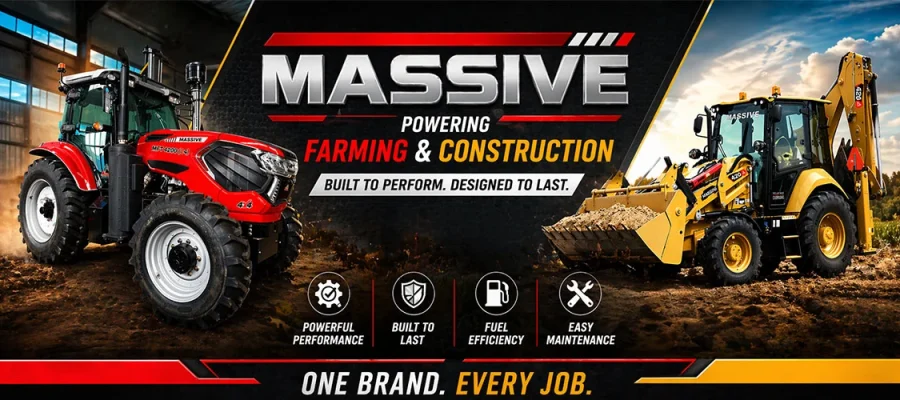
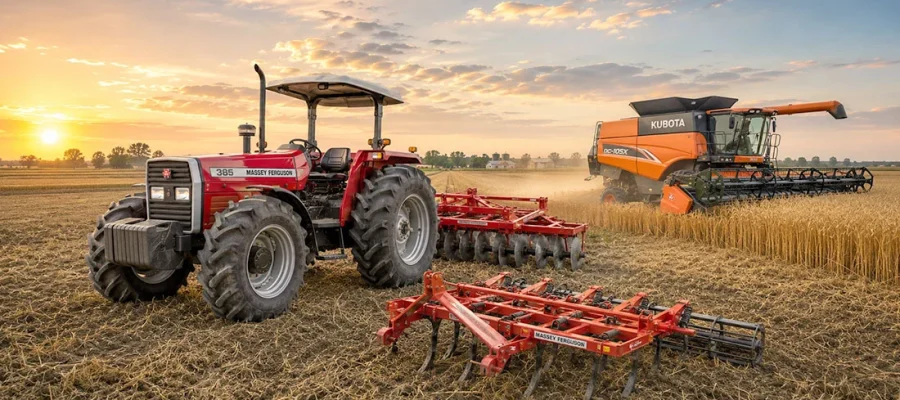
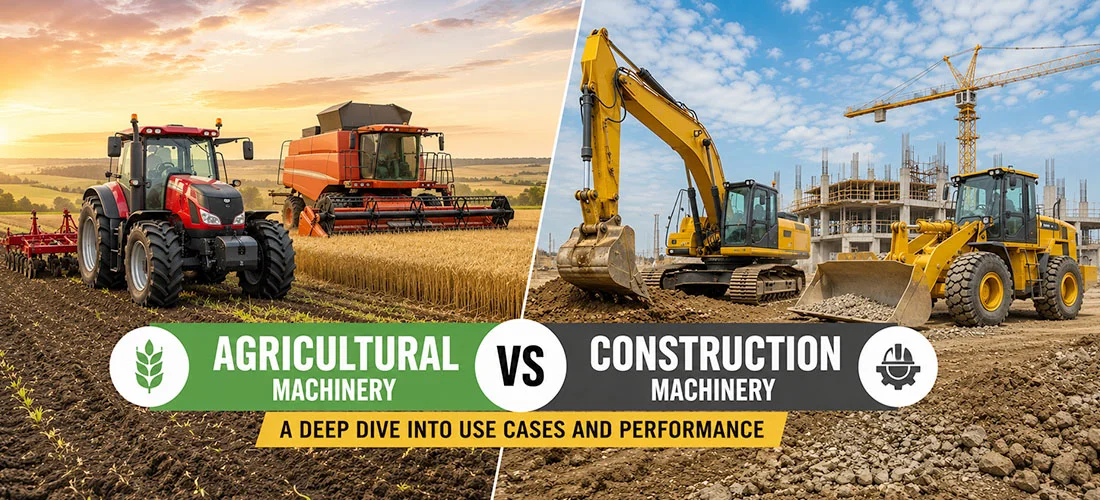
Agricultural machinery, including tractors, harvesters, and implements, is designed for farming tasks such as tilling, planting, and harvesting. Construction machinery, such as backhoe loaders, wheel loaders, bulldozers, and forklifts, handles earthmoving, lifting, and site preparation. Choosing the right machine depends on your industry, terrain, and operational goals.
Buying heavy machinery is a significant investment. Get it wrong, and you’re either underpowered for the job or paying for capabilities you’ll never use. Get it right, and your productivity can scale dramatically—whether you’re farming across the savannahs of West Africa or breaking ground on a construction project in the Caribbean.
Tractor Corner supplies both agricultural and construction machinery across Africa and the Caribbean, connecting buyers with the right equipment for their specific needs. This guide breaks down the key differences between these two categories, explores the most common use cases, and helps you make a confident purchasing decision.
What Sets Agricultural Machinery Apart From Construction Equipment?
The core distinction comes down to purpose. Agricultural machinery is built around the growing season—ploughing, planting, irrigating, and harvesting. Construction machinery, on the other hand, is engineered for earthmoving, material handling, and site development.
Both categories handle demanding physical work, but they do so under very different conditions. A tractor working the fields operates at low speeds across soft, uneven ground. A bulldozer clearing land for a housing development pushes through compacted soil, rocks, and debris at sustained force. The mechanical demands, drivetrain configurations, and hydraulic systems reflect these differences.
Understanding which category your operation falls into is the starting point for every purchase decision.
Agricultural Machinery: Use Cases and Key Equipment
What are tractors used for in African and Caribbean farming?
Tractors are the backbone of modern agriculture. Across sub-Saharan Africa and the Caribbean islands, farmers use tractors for land preparation, towing implements, and powering equipment via a power take-off (PTO) shaft.
A mid-range tractor (typically 60–120 HP) can handle most small-to-medium farm operations. Larger estates and commercial farms often require 150 HP and above. Key uses include:
- Ploughing and tilling – Breaking up compacted soil ahead of planting seasons
- Planting – Towing seed drills and planters across prepared land
- Spraying – Carrying boom sprayers for crop protection
- Hauling – Moving harvested produce, feed, and supplies around the farm
Tractors for sale through Tractor Corner are suited to a range of terrains, from the flat sugarcane fields of Barbados to the hillier farmland of East Africa.
How do harvesters improve crop yield efficiency?
Manual harvesting is labour-intensive and time-sensitive. A combine harvester can cut, thresh, and clean grain crops in a single pass—dramatically reducing post-harvest losses that remain a persistent challenge across many African farming regions.
For smaller-scale operations, row-crop harvesters and sugarcane harvesters offer more targeted solutions. The right harvester depends on crop type, field size, and the level of mechanisation already in place.
What role do agricultural implements play?
Implements extend what a tractor can do. Ploughs, disc harrows, ridgers, subsoilers, and cultivators all attach to a tractor’s three-point hitch, turning a single machine into a multi-purpose workhorse. For farmers looking to maximise their return on a tractor purchase, investing in a versatile set of farm implements is a smart move.
Construction Machinery: Use Cases and Key Equipment
When do you need a backhoe loader on a construction site?
A backhoe loader is one of the most versatile pieces of construction equipment available. It combines a front-end loader bucket with a rear-mounted digging arm, making it effective for:
- Trench digging for utilities and drainage
- Foundation excavation for small buildings
- Material loading and site clearing
- Road construction in rural and peri-urban areas
Backhoe loaders for sale are among the most searched-for pieces of heavy machinery in Africa and the Caribbean, particularly for infrastructure projects and road development programmes.
What is a wheel loader used for, and how does it differ from a bulldozer?
Wheel loaders excel at moving large volumes of loose material—gravel, sand, topsoil—quickly and efficiently. They’re fast, manoeuvrable, and well-suited to quarry operations, port logistics, and construction site material management.
Bulldozers serve a different function. Built for raw pushing power, a bulldozer uses a wide front blade to clear land, grade surfaces, and push heavy debris. Where a wheel loader picks up and carries material, a bulldozer shoves it. Construction sites that require significant land clearing—particularly in emerging urban areas across Africa—rely heavily on bulldozers.
Choose a wheel loader if material transport speed matters most. Choose a bulldozer if your priority is land clearing and heavy grading.
How are forklifts used in Caribbean and African logistics operations?
Forklifts are essential for warehouse operations, port facilities, and any environment where palletised goods need to be lifted and moved. Across the Caribbean, where import logistics and tourism-related supply chains are significant, forklifts play a central role in keeping goods moving efficiently.
Rough-terrain forklifts extend this capability to outdoor and uneven surfaces—useful on construction sites or agricultural estates where standard forklifts would struggle.
Agricultural vs Construction Machinery: How to Choose the Right Equipment
The right machine depends on three factors: your primary use case, your operating environment, and your budget.
| Factor | Agricultural Machinery | Construction Machinery |
|---|---|---|
| Primary purpose | Farming, food production | Building, earthmoving, logistics |
| Terrain | Soft, cultivated soil | Hard-packed ground, rubble, mixed surfaces |
| Key examples | Tractors, harvesters, implements | Backhoe loaders, bulldozers, forklifts |
| Typical buyers | Farmers, agribusinesses | Contractors, developers, logistics firms |
Some operations genuinely need both. A large agricultural estate developing new land may require a bulldozer to clear and level terrain before tractors and implements take over. Understanding where one category ends and the other begins helps you plan your equipment fleet more strategically.
Finding Tractors and Heavy Machinery for Sale in Africa and the Caribbean
Tractor Corner makes it straightforward to find agricultural and construction machinery for sale across Africa and the Caribbean. The platform connects buyers with a range of new and used heavy machinery for sale, helping farms, contractors, and logistics businesses source the right equipment at competitive prices.
Whether you’re searching for tractors for sale to expand a growing farm operation, or backhoe loaders for sale to support an infrastructure project, working with a specialist supplier ensures you get machinery suited to local conditions—not just whatever happens to be available.
Frequently Asked Questions
What is the difference between agricultural and construction machinery?
Agricultural machinery is designed for farming tasks such as ploughing, planting, and harvesting. Construction machinery handles earthmoving, land clearing, lifting, and site preparation. While some equipment, such as tractors, can overlap, most machines are purpose-built for a specific category.
Which tractors are best for farming in Africa?
Mid-range tractors between 60 and 120 HP are well-suited to most African farming conditions. For commercial-scale operations or large estates, 150 HP and above is typically recommended. The best choice depends on your crop type, field size, and terrain.
Where can I find backhoe loaders for sale in the Caribbean?
Tractor Corner supplies backhoe loaders and other construction machinery to buyers across the Caribbean. Searching through a specialist platform ensures you find equipment that meets local regulatory standards and operational requirements.
Is it possible to use a tractor for light construction work?
Yes, in some cases. Tractors fitted with front-end loader attachments can handle light material moving and site preparation. However, for sustained heavy construction work, purpose-built construction machinery—such as a backhoe loader or wheel loader—will deliver better performance and durability.
What should I consider when buying used heavy machinery in Africa?
Key considerations include the machine’s service history, hours of use, availability of spare parts locally, and whether the seller offers any warranty or after-sales support. Buying through a reputable supplier like Tractor Corner reduces the risk associated with purchasing used equipment.
Related Posts