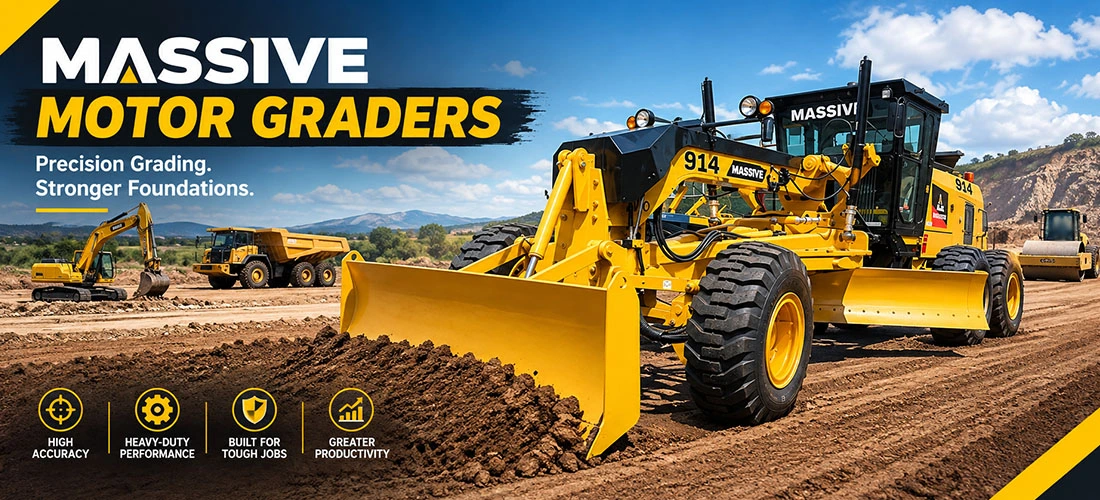
Motor graders shape and level ground with precision, creating the stable foundations that roads, airstrips and drainage systems depend on. Choosing the right machine—such as the MASSIVE 913 or MASSIVE 914 from Tractor Corner—directly affects how long that infrastructure holds up under traffic, weather and time. For anyone searching for motor graders for sale, understanding their role in construction helps ensure the heavy equipment investment pays off for years to come.
Roads crack. Airstrips shift. Drainage systems fail. When infrastructure doesn’t last, the problem often traces back to what happened before the first layer of asphalt was ever laid. Grading, the process of shaping and levelling the earth beneath a project, sets the tone for everything built on top of it. Get it wrong, and even the highest-quality materials won’t save a project from premature wear.
This is where motor graders come in. These machines aren’t just another piece of machinery for sale—they’re the quiet workhorses responsible for creating flat, stable, properly sloped surfaces that infrastructure can rely on. Whether you’re planning a new highway, maintaining a gravel road, or preparing a site for a building foundation, the quality of your grading work has a direct impact on how long that project survives.
In this post, we’ll explore how motor graders contribute to durable infrastructure, what features matter most when evaluating heavy equipment for sale, and why models like the MASSIVE 913 and MASSIVE 914 have become popular choices for contractors who need dependable results.
What Does a Motor Grader Actually Do
A motor grader is a construction machine fitted with a long, adjustable blade positioned between its front and rear axles. That blade cuts, spreads and levels soil, gravel or asphalt to create a smooth, even surface. Unlike bulldozers, which push large volumes of material, motor graders are built for precision—fine-tuning grades, slopes and contours to exact specifications.
This precision matters because infrastructure doesn’t just need to look flat. It needs to drain water correctly, bear weight evenly, and resist erosion over time. Poor grading causes water to pool, potholes to form, and cracks to appear far sooner than on a properly prepared base.
Why Does Proper Grading Affect Infrastructure Lifespan?
Grading affects infrastructure lifespan because it determines how a surface handles stress over time. A well-graded road distributes vehicle weight evenly across its foundation, reducing the strain that leads to cracking and rutting. Proper slope also ensures rainwater runs off instead of collecting on the surface, which is one of the leading causes of pavement failure.
In short: if the base isn’t right, nothing built on top of it will perform as expected, no matter how good the materials are.
Where Are Motor Graders Used in Infrastructure Projects?
Motor graders show up across a wide range of construction and maintenance projects, including:
- Road construction and resurfacing – shaping the sub-base and fine-grading the surface before paving.
- Airport runway preparation – achieving the tight tolerances required for safe aircraft operations.
- Drainage systems – creating slopes that direct water away from roads, fields and building sites.
- Land development – levelling sites before foundations, parking lots or utility lines are installed.
- Rural and gravel road maintenance – restoring crown and smoothness to unpaved roads that see heavy use.
Because these applications span both new construction and ongoing maintenance, motor graders tend to see heavy, consistent use over the life of a fleet. That makes reliability and durability key considerations for anyone comparing motor graders for sale.
What Should You Look for When Buying a Motor Grader?
Not all motor graders are built the same way, and the differences matter once a machine is out on a job site. When evaluating heavy equipment for sale, consider the following:
How Important Is Blade Control and Precision?
Blade control is arguably the most important factor in grading accuracy. Machines with responsive hydraulic systems and adjustable blade angles allow operators to make fine adjustments without slowing down productivity. Choose a motor grader with precise blade control if your projects involve tight tolerances, such as airport runways or finished road surfaces.
Does Engine Power Match the Job Size?
Larger projects—think highway construction or large-scale land development—require motor graders with enough engine power to move material efficiently without excessive fuel consumption. Smaller rural road maintenance work may not need the same horsepower, so matching machine size to job scope helps control both upfront and operating costs.
How Does Operator Comfort Affect Productivity?
Grading is detail-oriented work that often requires long hours in the cab. Features like ergonomic controls, clear visibility and reduced vibration help operators maintain precision throughout a full shift, which translates directly into more consistent grading results.
What Role Does Brand Reputation Play?
Reputation matters because it reflects real-world performance over time. Brands with a track record of durability and parts availability reduce the risk of costly downtime. This is one reason contractors often turn to established names like MASSIVE, manufactured by Tractor Corner, when comparing machinery for sale.
Why Are the MASSIVE Motor Graders Popular Choices
The MASSIVE 913 and MASSIVE 914, both part of Tractor Corner’s motor grader lineup, have built a reputation among contractors looking for dependable grading equipment. As part of the MASSIVE brand, these models are designed to meet the demands of both large infrastructure projects and ongoing road maintenance work.
Choose the MASSIVE 913 if you need a grader suited to standard road maintenance and mid-sized construction projects, where reliable blade control and manageable operating costs are priorities. Choose the MASSIVE 914 if your projects call for additional power and capability, such as larger land development or heavier-duty infrastructure work.
Both models reflect Tractor Corner’s broader approach to heavy equipment: building machines that hold up to repeated, demanding use across a project’s lifetime—an important factor for any contractor comparing motor graders for sale.
How Do Motor Graders Fit Into the Bigger Infrastructure Picture?
Motor graders rarely get the spotlight in conversations about infrastructure. Bridges, highways and airports draw public attention, but the grading work underneath them is what makes long-term performance possible. A road that’s properly graded before paving will outlast one that wasn’t, regardless of how good the asphalt mix is.
For contractors and fleet managers, this means the decision to invest in reliable heavy equipment is not just about completing today’s project. It’s about reducing future maintenance costs, avoiding premature infrastructure failure, and protecting the reputation of the work being delivered.
Making the Right Investment in Motor Graders
Infrastructure that lasts starts with the ground beneath it, and that ground is shaped by the quality of grading work performed before construction even begins. Motor graders like the MASSIVE 913 and MASSIVE 914 give contractors the precision and durability needed to get that foundation right the first time.
If you’re currently exploring motor graders for sale, take time to match machine capability to your typical project scope, and don’t underestimate the long-term value of choosing established, reliable machinery. The right grader today can mean fewer repairs, less downtime, and more durable results for years to come.
Frequently Asked Questions
What is the main purpose of a motor grader in construction?
A motor grader shapes and levels soil, gravel or asphalt to create a smooth, properly sloped surface. This surface forms the foundation for roads, runways, drainage systems and other infrastructure projects.
How much does a motor grader typically cost?
Pricing varies significantly based on size, power, brand and features. Contractors should request quotes directly from suppliers like Tractor Corner to compare models such as the MASSIVE 913 and MASSIVE 914 against their specific project needs and budget.
What’s the difference between a motor grader and a bulldozer?
A motor grader uses a long, adjustable blade to fine-tune grading and slope with precision, while a bulldozer is designed to push large volumes of material. Graders are typically used for finishing work, while bulldozers handle bulk earthmoving.
Who typically uses motor graders?
Motor graders are commonly used by road construction crews, municipal maintenance departments, airport authorities and land development contractors—essentially anyone responsible for preparing or maintaining large, level surfaces.
Are there risks to using the wrong size motor grader for a job?
Yes. Using an undersized grader on a large project can slow progress and cause uneven wear, while an oversized machine on small jobs can increase fuel costs unnecessarily. Matching machine size to project scope helps protect both timelines and budgets.
Related Posts