
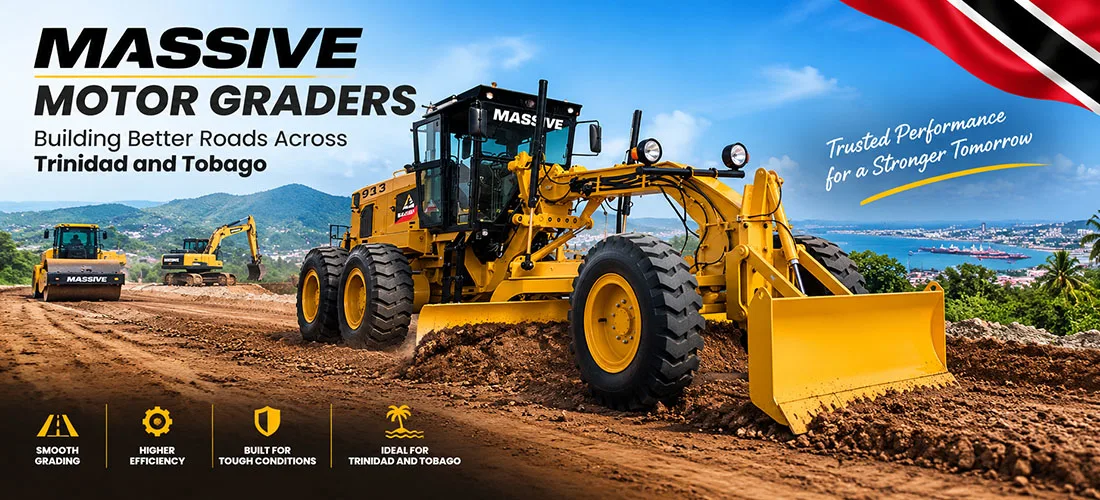
Regional corporations across Trinidad and Tobago rely on motor graders to maintain rural roads, manage drainage, and keep agricultural access routes functional throughout the rainy season. Tractor Corner supplies the MASSIVE 913 and MASSIVE 914 Motor Graders, two models built for the demands of local terrain. Choosing the right machine depends on road width, soil conditions, and maintenance frequency.
Rural roads form the backbone of community life across Trinidad and Tobago. They connect farmers to markets, schoolchildren to classrooms, and villages to the wider network of regional services. When these roads deteriorate — as they inevitably do under heavy rainfall and constant use — the people who depend on them feel it immediately.
Regional corporations carry the responsibility of keeping these roads passable. That task becomes far easier with the right equipment. Motor graders, in particular, are essential for levelling road surfaces, correcting drainage issues, and preventing the potholes and erosion that make rural travel unpredictable.
This guide looks at why motor graders matter for road maintenance in Trinidad and Tobago, what regional corporations should consider when selecting one, and how Tractor Corner’s MASSIVE 913 and MASSIVE 914 Motor Graders fit into that picture.
Why do rural roads in Trinidad and Tobago need Motor Graders
Trinidad and Tobago’s climate presents a specific challenge for road maintenance. The wet season brings heavy, sustained rainfall that washes away loose surface material, carves ruts into unpaved roads, and compromises drainage. Without regular intervention, rural roads can become impassable for vehicles, delaying everything from agricultural deliveries to emergency access.
Motor graders address this problem directly. Their long blades cut, shape, and redistribute surface material, restoring a level camber that sheds water instead of trapping it. Used consistently, a motor grader can extend the lifespan of an unpaved road significantly, reducing the need for costly full reconstruction.
For regional corporations managing limited budgets across large networks of rural roads, this preventative approach makes financial sense. Grading a road periodically costs far less than rebuilding it after it washes out.
What should regional corporations look for when buying machinery for sale in Trinidad and Tobago?
Not every motor grader suits every road. Before purchasing Machinery for sale in Trinidad and Tobago, regional corporations should weigh a few practical factors:
- Road width and terrain: Narrower rural roads and tighter turning radii call for a more manoeuvrable grader, while wider access roads can accommodate larger machines.
- Soil type: Trinidad and Tobago’s soils range from clay-heavy ground in some regions to looser, sandier conditions in others. Blade control and down-pressure capability matter here.
- Frequency of use: A corporation grading roads weekly needs a durable, low-maintenance machine, while occasional use may allow for a lighter-duty option.
- Operator familiarity: Equipment that is intuitive to operate reduces training time and keeps maintenance schedules on track.
- After-sales support: Local parts availability and servicing matter as much as the machine itself, particularly in a market where downtime can delay essential road work.
Choose a smaller, more agile grader if your corporation manages narrow, winding rural routes. Choose a larger model if your network includes wider access roads that need broader coverage per pass.
Where can you find motor graders in Trinidad and Tobago?
Tractor Corner supplies Motor Graders in Trinidad and Tobago through its range of MASSIVE equipment, a brand recognised internationally for heavy machinery built to handle demanding ground conditions. Two models in particular stand out for regional corporations: the MASSIVE 913 and the MASSIVE 914 Motor Graders.
What is the MASSIVE 913 Motor Grader used for?
The MASSIVE 913 Motor Grader is suited to regional corporations managing standard rural road networks. It is built to handle the grading, levelling, and drainage work that keeps unpaved roads functional through Trinidad and Tobago’s wet and dry seasons alike.
What is the MASSIVE 914 Motor Grader used for?
The MASSIVE 914 Motor Grader offers an alternative configuration for corporations with broader or more demanding road maintenance needs. As part of the same MASSIVE range, it shares the brand’s reputation for durability while providing options suited to different scales of operation.
Tractor Corner offers both models, giving regional corporations a local source for motor graders in Trinidad and Tobago, backed by equipment support and parts access.
How often should rural roads be graded?
There is no single answer that applies to every road, but most regional corporations find that grading frequency depends on traffic volume, rainfall patterns, and road surface type. Roads carrying heavy agricultural or commercial traffic typically need grading more often than low-traffic residential routes. During the wet season, more frequent passes help prevent water pooling and surface breakdown before they become serious structural issues.
A practical approach is to inspect rural roads after major rainfall events and schedule grading proactively rather than waiting for complaints about impassable conditions. This keeps maintenance costs predictable and avoids the far higher expense of road reconstruction.
Keeping Trinidad and Tobago’s rural roads moving
Rural road maintenance is not a one-time project. It is an ongoing commitment that shapes how communities access schools, markets, and essential services throughout the year. Regional corporations that invest in reliable motor graders position themselves to respond to road conditions proactively rather than reactively, saving money and reducing disruption for the people who depend on these routes every day.
Tractor Corner’s MASSIVE 913 and MASSIVE 914 Motor Graders offer regional corporations a local option for addressing this challenge, with equipment suited to the varied demands of Trinidad and Tobago’s rural road network. For corporations evaluating machinery for sale in Trinidad and Tobago, comparing these models against your specific road conditions, soil types, and maintenance schedules is a sensible first step toward a more resilient rural road network.
Frequently Asked Questions
What is the main benefit of using a motor grader on rural roads?
A motor grader restores a level, properly cambered road surface that sheds rainwater effectively, reducing erosion and extending the time between major repairs.
How do I choose between the MASSIVE 913 and MASSIVE 914 Motor Graders?
The right choice depends on the width of your road network, the volume of traffic it carries, and how frequently grading is required. Regional corporations should assess their specific road conditions before deciding.
Are motor graders cost-effective for small regional corporations?
Yes, in most cases. Preventative grading costs considerably less than reconstructing a washed-out or badly deteriorated road, making it a sound long-term investment even for corporations with smaller budgets.
Where can regional corporations source motor graders in Trinidad and Tobago?
Tractor Corner Trinidad and Tobago supplies the MASSIVE range of motor graders, including the MASSIVE 913 and MASSIVE 914, along with local support for parts and servicing.
What time of year is most important for road grading in Trinidad and Tobago?
The wet season places the greatest strain on unpaved roads, making proactive grading before and during this period particularly important for preventing long-term damage.
Related Posts
